Wednesday, April 9, 2025

Final Critical Reflection

The documentary "The Shape Of Stories", developed by Alec Labossiere, is a documentary that explores the different mediums that can be utilized in order to tell a story. The documentary informs and portrays the many different forms that they may take the form of and how that impacts individuals and their lives.

The documentary effectively engages its audience by exploring a relatable and accessible topic for young kids to young adults: the will to express themselves In this particular exert, it highlights how music specifically is a form for telling stories. That individuals can engage in storytelling in unconventional ways in order to get their point across. The documentary targets a broad audience, from young kids to young adults (10-25), by focusing on universal themes of expression and creativity. It incorporates elements like music and visuals that resonate with its viewers, making the content more accessible and appealing. The B-roll footage plays a crucial role in engaging the audience by giving context to certain phrases or giving more relatability them. These elements collectively create an authentic and grounded narrative that viewers can connect with on a personal level.


The documentary's production involved mastering filmmaking techniques like framing subjects using the rule of thirds to create visually engaging shots. This approach elevated the film's professionalism while mirroring its theme of balancing structure and creativity. Sound design was also crucial. Instead of eliminating background noise entirely, I chose to retain some natural sounds during editing. This added realism, grounding the documentary in everyday life. For example, faint keyboard taps during a music composition scene underscored the intimacy of the creative process.

Unlike previous projects, this documentary adopted a "controlled amateurism": a blend of technical discipline and organic imperfection. While transitions were smoother and color grading was warm and inviting, minor flaws like shaky shots were intentionally kept to avoid a sterile feel. This approach aligned with the documentary's message: narratives often resonate more deeply than overly polished ones. Music was a narrative device itself, composed by the interviewee. Each track mirrored their emotional journey—playful melodies for childhood nostalgia, melancholic pieces for self-doubt. This synergy reinforced the documentary's focus on self-representation: the subject wasn't just telling their story; they were scoring it, ensuring every beat aligned with their experience.


The documentary emphasized the universal truth that everyone carries a story worth sharing, a theme brought to life through deliberate mise-en-scene choices. The setting of his home, framed with warm, lighting and earthy tones, created an intimate, inviting atmosphere, mirroring the personal nature of his musical journey. This visual warmth transformed his narrative into a heartfelt moment, being able to draw viewers deeper into the emotional core of his story. The music itself acted as a timeline, evolving from playful, nostalgic melodies reminiscent of childhood video games to introspective, somber compositions reflective of young adulthood. This auditory progression mirrored the documentary’s exploration of storytelling’s transformative power, how creativity matures alongside lived experience. By blending these elements the film achieved a story of crafting stories through sound.

The research that had gone into the documentary was gathered by viewing the documentaries that we had previously gone over earlier in the year and opinions both in person, and online. Because the topic is extremely subjective,I found it easier to ask people what their opinions online were or in person. What makes a story a story? I was able to gather that, if someone's ideas are getting across then they are able to tell a story. Whether that through their voice or even their own hands. The media itself also gave voices to those who's stories needed to be heard. The news itself acts as a shining example to how a single story being heard can flip the likeness and influence a person has. However, most if not all agreed on one thing which was that stories can be told through almost any means. Simply living is telling a story in itself. 

Early in my research, I was unsure how to tell my story. Then, I watched documentaries about novelists and their creative processes. These films taught me that authenticity is key: stories are most powerful when told in your own unique voice. Authors like Neil Gaiman emphasized the importance of emotional truth over strict structure, which inspired me to trust my perspective. This insight guided my documentary. Instead of following a formula, I focused on personal, heartfelt storytelling. I used intimate settings and evolving music to capture my subject's journey authentically. Just as literary documentaries highlight resonant moments, I chose scenes that felt emotionally honest. 

The documentary was the conclusion to all the research, planning, and reading that I put into it.
. While not all parts of it were properly delivered it was truly something I was proud of. My time reading, recording, learning, and making this last Documentary the best it could be. All my hard work gives you this. I know it'll be up to par. The documentary marked the conclusion to all my research, planning, and dedication. It was the final chapter in a journey of discovery and creation, where every moment of reading, recording, and learning contributed to its development. While not every aspect turned out perfectly, I took immense pride in what I had achieved. This pride wasn't just about the end product; it was about the process itself. My time and effort were invested in making this documentary the best it could be, and I knew that all my hard work would pay off. The documentary wasn't just a project; it was a reflection of my growth as a filmmaker and storyteller. I was confident that it would meet expectations because it was crafted with sincerity and passion. In the end, I knew that this documentary would stand a showing of my perseverance. It was more than just a a simple conclusion but a conclusion to my highschool projects. A stepping stone for future projects and a reminder that every story, no matter how imperfect, holds value and beauty.

All content

 Here are the final results!

The Instagram posts:
https://www.canva.com/design/DAGkN_wKYEI/Q6av1z8PB8WLHIjA1WFCMA/edit?utm_content=DAGkN_wKYEI&utm_campaign=designshare&utm_medium=link2&utm_source=sharebutton 

Magazine:
https://www.canva.com/design/DAGkM_pO9ks/z1TZjz5q21YI2wVS4EksxQ/edit?utm_content=DAGkM_pO9ks&utm_campaign=designshare&utm_medium=link2&utm_source=sharebutton 

Film: 
https://drive.google.com/drive/folders/1KXM6pHUl8JxuarfN_ZSlCmdhMda8Wbw9 

Final Reflection

This is it huh blog, the last two years have been truly eventful in this class. I went from someone who had no idea about the things within the media space to becoming well informed. This truly helped me understand how I live my daily life and how much happens in the world around me. It was honestly a bit humbling how all these different facets of media and it's mediums effected my life in ways I didn't even know. 

Not only that but film making in general. There is so much that goes into creating and making these films that it's honestly impressive how well we have been doing. That is in no small part to Mrs.Stoklosa, our teacher who has helped us along the way. There are a lot of concepts I don't think I would have been able to easily graph if not for her teaching.

 Aice media as a whole has been an incredibly interesting journey. While not fautless, I think I can say with certainty that my time was spent properly and that when I go out into the world, I'll be able to appreciate, understand, and criticize things better. The original goal all the way back in As level was for us to never look at movies and media the same. I know Mrs.Stoklosa will be happy that I will never be able to let my parents just enjoy a movie with me around. 

As for my project reflection, I think there were a lot of things I could have tweaked up but I am satisfied with my work. There are always twists and turns along the road but it's our job to navigate them. I think I found my way. Goodbye Aice Media, stand proud, you were great. 


Thursday, April 3, 2025

B roll Rolling

Today I just worked on compiling all the b roll and making sure it makes sense. For the most part I got it right I think. For example, I have a few things happening in his room, which is where he produces a lot of his music or on his piano in his living room which is where he plays when he plays for people in real life. Both are pretty important to him and his expression of music so I thought I’d integrate it properly into the excerpt. Here’s a little sneak peak at it.

Obviously I won’t use all of it for my b roll but some of it in bits would do the trick. And also the audio would help with the transition. Other ones work as a tour of his room, some close up to his work on the computer and other things. I made some own b roll myself using computer effects so that works too. I’m excited this time because I overshot and now I have ample amount of footage to use instead of scurrying to figure out what I should include like last project. I guess I do learn, slowly but surely. That’s about it for today! 


Tuesday, April 1, 2025

Music to my ears


 Welcome back to my blog! We are certainly approaching the end to the project and there is still a bit of stuff to do left. This week I’m finishing up the project, on Wednesday next week, that’ll be the FINAL day we can submit the project. Crazy how it really is almost completely over, so much time passed and so any things have happened regarding the project. One of those things actually is the music for my editing!

While the main video for the project was focused on music, and the main man of the project was a musician, it felt almost perfect to integrate his music into the project. I looked over back at some of the documentaries we watched and though music was integrated, it wasn’t always prevalent. I wanted to use music that would fit the vibe of the documentary, as well as be appropriate for the scenes they were being implemented into. This gave me the chance to go down his catalogue of songs that he has on his YouTube channel! Let’s see what we found!


I felt like the song “Petals of Warmth” would fit the vibe of a good background music when speaking of the more sentimental topics, such as his original reason for starting to create music. It a more nostalgic tone that I feel would be appropriate for looking back at the memories that he had with his brother, playing the piano and learning it to further express himself. I think however that a song like this cannot be intrusive. It needs to be played low. I’ll keep that in mind when further editing and mixing the voice.


I think the song “Sweetened clouds above a candy sky” works super well for the upbeat more hopeful atmosphere of the ending of the exert. It really makes me want feel hopeful. Gasim actually taught me in songs, there are certain core progressions that make people feel certain ways. I feel like you can get that feeling from the dialogue as well as the music. He really wasn’t kidding; music can tell you a whole story without words.


We also utilized a cool effect that goes from the songs playing on the piano, to the actual songs playing themselves. Of course they are all original covers played by Gasim himself so we could avoid the copyright. They are integrated pretty seamlessly so I’m proud of that. Finally of course, I got permission from the artist himself to use the music. He even signed it, the image below shows that.


I’m very happy I got that done! Let’s see how it turns out! Until next time!

Friday, March 7, 2025

Agenda & Dates

Since I was not here for the class discussion and was sick, I was told to make another post that goes over my project. After finalizing what exactly my project was going to look like, I needed to start thinking about planning for everything. The upcoming week schedule is what you see bellow:


To explain further: 
This Monday I’ll start off with the production on the Instagram videos. While there is promotional pictures for the page, there is also to be videos of the project. Things that would be in snippets for people to get a general sense of what the documentary is about or maybe what goes on behind the scenes. Something to spice up the page to not have it just be images. This will be the start of the recording process. I will try to get different people because of the theme of people each getting their own episode. I already had an idea of using someone who was previously in another groups film, Kyle Dutra, as his creative way of making street art would be perfect for a small snippet.

Next is having the main interviee start facilitating themselves with the interview questions I have prepared. I feel it’s better, in this case, to have them know what questions are to come rather then have them answer on the spot. I have prepared a few questions that I will ask on the spot but for the most part, giving a general idea should be good.

Working on a teaser for Instagram is what Wednesday has planned and that will mostly be story boarding for that. The teaser will most likely have parts of the actual documentary from it so I don’t feel the need to do too much separate from actual filming with it. However, the teaser should be able to build up anticipation for the episode, I’ll run a poll amongst a group of friends when I’m finished with it to see how it comes out. Maybe that’ll be better for having feedback before it’s actually graded.

Thursday is all about finishing at least setting everything up for this teaser. There isn’t much more to say then that I should have it finished by then to stay on task.

For Friday specifically, I’ll dedicate the day to touching up on my blog posts and such. Making sure I’m up to date with everything and that for the end of the quarter, all the blog posts I need are in. It’ll be good to go back and fix everything that needs to be fixed.

For now that’s about it, thank you for tuning in and I’ll see you next time!

Wednesday, March 5, 2025

Interviewee found!

Hello and welcome to today’s post! It looks like I’ve finally found the person I’m going to be doing my documentary on! 

My good friend of 7 years Gasim and I have always been close. Not only through school but in our interests as well as being neighbors. The main thing I feel like defines our friendship is each of us finding ways to create things. For Gasim, his way of telling things is through his talent at making music. So much so that he’s even started his own music channel on YouTube

I’ve actually helped him produce a few of these songs. I’m not a music genius but when it comes to helping him portray a certain feel I think we make a pretty good team. I was thinking about using this in conjunction with the interviews to create a truly unique documentary on how his music and the many different songs he’s produced. I’m sure this will prove to be great, I’m very much looking forward to it! If you have time, feel free to listen to one of my favorite songs of his.  https://youtu.be/4fwU2lQ-QIg?si=b7_c-GvVfRHd1QIR 

Welp, that’s all for today! See you next time!


Monday, March 3, 2025

Interview questions

 Welcome back to my blog! As the first post of the week, I wanted to go over my interview questions that I will be presenting. I have a bunch of them! While I don’t think I’ll be using all of them, I’d like for Gasim to be able to choose which one he specifically wants to do out of the selection. I organized them into groups for him so that at least one of each section get answered. I’ll explain the groups as we go on.


Inspiration & Creative Process: How exactly he came to these ideas

1. What first inspired you to use Music as a way to tell stories?

2. How do you come up with the stories you tell? Do they come from personal experiences, observations, or something else?

3. What themes or messages do you find yourself returning to in your work?

4. Do you plan your stories out in advance, or do they develop as you create?


Medium & Expression: How does he use his specific medium to effect people and why it’s different

5. How does Music help you express your story differently than other forms of storytelling?

6. What techniques do you use to make your stories more impactful or immersive?

7. How do you use elements like color, texture, movement, or sound to enhance your storytelling?

8. Are there limitations in your medium that force you to be more creative in how you tell a story?


Challenges & Evolution: the trials and tribulations he might have felt making them

9. Have you ever struggled to tell a story the way you envisioned it? How did you overcome that?

10. How has your approach to storytelling evolved over time?

11. Do you ever worry about how your stories will be received? How do you balance personal expression with audience interpretation?


Meaning & Connection: His intentions with his work

12. What do you hope people take away from your stories?

13. Do you see your work as a form of personal expression, a way to connect with others, or both?

14. Is there a particular story you’ve told that means the most to you? Why?

15. If someone were to interpret your work differently than you intended, how would you feel about that?


These interview questions should help me get a good conversation out of him as well as room for good background footage and b roll. That’s about it for today. Until next time!

Sunday, February 16, 2025

Genre research: An idea of what I might want to write about

I started watching the first part of this documentary of what I might want to do my documentary on: writing. Watching the first bit of it this is what I was able to discern:


The core idea is to prioritize getting a screenplay written over making it perfect from the start. The advice, "Don't get it right, get it written," encourages writers to push through initial fears and complete a first draft, understanding that rewriting is where the real improvements happen. Conceptualizing the story and characters beforehand is important, but during the writing process, maintaining momentum and avoiding over-analyzing every detail is key. Setting daily writing targets and giving yourself permission to fail can lead to surprising results and a more enjoyable writing experience. It's about valuing the process of creation and recognizing that the first draft is just the beginning.


https://youtu.be/V6Yql0jrjow?si=kLLxwPNJMrFlcryL

Friday, February 14, 2025

Scheduling and Planning START!

Every year the time of the project that takes weeks initially seems like a long time but time doesn’t wait for you. Those weeks turn to days, turn to hours, turn to deadlines. It’s easy to think you have all the time in the world but that’s not realistic. Let’s see what I can really plan.


When looking at everything right now, I don’t think I have any exact dates for things planned yet. I’ll have to make a more concrete timeline the week after this one but for now I have ideas of things I need to do and things I already have planned personally. For example, I have university orientations during the coming weeks and I have family events and even my drivers license pick up during the time of March. March will be hectic so I have to take full advantage of the times in class accordingly.


The remaining weeks of February should be good since I don’t have any other major events planned but I also need to think of possible club meetings that are coming up. I’m in the schools NHs and in order to stay in the club a certain amount of hours are to be gotten within an allotted amount of time. How will I navigate this with the deadlines I set for myself with this project? All things that must be considered. 


 I know that for this project, I need extensive B-roll and that I need interviews. For the ideas I have I think the interviews will take a lot of time to get as well as making interview questions and topics. Setting up the baseline for these will be the most important in these starting weeks. I think that if I can manage to organize myself these next two weeks and stay on task with my blogs and work I should be able to get things done quite easily. In order to motivate myself to stay on task, I’ve challenged my brother to keep each other in check. Me in posting my blogs on time and him on staying on tasks with his sports activities. Maybe I’ll be able to use him in an interview. I’m getting off topic. 


With these things in mind, I’ll be able to keep myself on task and develop a more wholistic plan for my schedule. Until next time!

Wednesday, February 12, 2025

The time has finally come… A level Project, START!

So it’s been a year since the last As Level project and a lot has happened both in and out of school. I think I’ve learned a lot and even though I still have a few problems from last year lingering, I think I’ll still be able to fix it up this time around and produce a project that is truly worth while, with that being said…


Welcome back to my blogging of the A level media course. It’s about that time where we finally lock in and buckle down for the main course of media: the final project. During this time I’ve had a lot to think about as well as many things to think about over the year. All the different projects we did and the different ideas that we got from them. I’ve got a good idea of exactly what I want to do.


The documentary project earlier this year was very fun. As I foreshadowed in my previous posts: I will be making a documentary as my final project. As for what in, I have a few general ideas but nothing quite so concrete as to reveal right now. I feel some brain storming would be needed in order to really bring out these ideas to the max. I am not just brain storming ideas though. I feel like this time around early it’d be important to start thinking about a timeline for how I want to do things and really get organized. I want to be ambitious with my final big project of high school but if I’m not organized, nothing will come of it. Let’s hope this time I can really show my stuff. Until next time!

Friday, December 13, 2024

CCR Critical Reflection

The documentary "A Sigma's Slang", developed by Alec Labossiere and Romina Olvera, is a documentary that explores the connection people can make through the shared use and understanding of slang, specifically from Gen Z. The documentary informs and portrays the many uses of Gen Z slang in a school setting while also showing how it impacts the people in it including students and teachers.

The documentary effectively engages its audience by exploring a relatable and accessible topic for high school students: the slang commonly used in their daily lives. It highlights how this shared language fosters connections among students and reflects the unique dynamics of their social circles and environments. Universally popular words create a sense of unity within the school, bridging different grades and groups, while other slang terms remain more niche, emerging from specific friend groups, hobbies, or cultural influences. This distinction became clear during interviews, as younger students demonstrated greater fluency with trendy, rapidly evolving slang, while older students continued to use it but gravitated toward more familiar or established terms. This shift not only demonstrates how language evolves within the school community but also emphasizes how different age groups engage with slang in ways that reflect their experiences, maturity, and connection to broader cultural trends.

The project’s estimated audience age ranged from 13-21, as it was specifically designed to engage high school students or those who had recently experienced high school life. It did not target a specific gender but instead focused on individuals living in suburban areas. This choice was intentional, as it mirrors the environment of the school, making the content more relatable and appealing to those from similar backgrounds. To strengthen this connection, the project incorporated elements that would resonate with the audience, such as carefully selected music and visuals aligned with the tastes and experiences of teenagers today.

The B-roll footage played a crucial role in engaging the audience by capturing key aspects of high school life that many students encounter daily. It showcased moments such as walking through hallways, casual conversations among friends, waiting for class to begin, and leaving school while discussing plans for the evening or weekend. These small yet meaningful interactions highlight the social bonds that define the high school experience, making the project feel authentic and grounded.

The documentary also aimed to capture the language and slang commonly used by high school students, adding an extra layer of relatability. By featuring familiar phrases and expressions, it created a sense of belonging for viewers, enabling them to see their own lives reflected in the project. The visuals, combined with a soundtrack aligned with current music trends, further reinforced this connection by evoking the emotions and energy of teenage life. These elements collectively worked to engage the audience, not only through relatable content but also by offering a nostalgic and authentic portrayal of the high school experience.

Research that went into the documentary as well was conducted by the several documentaries that were previously seen as well the infortmation and many discussions over the internet about our evolving slang and the many new terms that get brought up every so often. A huge factor when researching was talking amongst the students of their opinions. Because it was a very open topic, the opinions that we got were quite varied and the groups and types of language each person used was as well. An example of this was through the interviews. Most people had a general similarity in phrases that they knew off the top of their head but when talking with friends, there were always different answers, some people even trying not to speak in the slang. There was also the many filmaking skills that had been demonstrated through viewing the documentaries such as where a person's face should be in the thirds as well as blocking out background noise in the editing. However, since the documentary went for of an amateurish approach, the background volume played to it's benefit.

Research for the documentary drew inspiration from previously viewed documentaries, online discussions and student input regarding the evolution of slang. Online conversations highlighted how slang rapidly changes with new terms emerging constantly. A major part of the research process involved talking directly to students to gather their perspectives on the topic. Given the open ended nature of slang, the responses varied significantly within the school. For example, during interviews many students shared commonly known phrases while others provided more niche terms influenced by their specific friend groups or social environments. A few students intentionally avoided using slang which demonstrated the different levels of comfort and preference for using this type of language.

The documentary used filmmaking techniques learned through viewing the previous documentaries such as framing subjects in the rule of thirds and minimizing background noise during editing. However, since the project embraced a more amateurish approach, the inclusion of natural ambient sounds worked to its benefit, enhancing the documentary’s relatability.

Ultimately, the documentary was a culmination of all the research and planning that both Romina and my efforts in portraying the impact of Gen Z slang. While not all parts of it were purposely executed, it was a a big way to learn about documentary's themselves and how much effort goes into making them. This experience makes me determined for the next big project and more to come.


Day 4: ✨Editing✨

The most challenging part of the project was the editing—this is where everything seemed to go wrong.

To start, the software I typically use for editing, Adobe Premiere, had an expired subscription, and I couldn’t renew it at the time. This immediately set me back, especially with the time constraints we were under. Although I knew the editing wouldn’t be as polished as it could be, we still had to get it done and submitted. I decided to use CapCut instead, as it’s a solid substitute for Premiere. To efficiently bring both of our visions to life, Romina and I worked over a call to finish the project. While I compiled everything, Romina gave suggestions and provided additional music and videos to enhance the project.

Adjusting to CapCut was tricky at first since I had to rediscover all the small details of the software, but I adapted quickly. However, an unexpected issue arose—files kept getting deleted randomly, making it much harder to finish the edit. After a long night, we finally completed the project and were both really happy with the result.


Unfortunately, a submission problem surfaced. Each of us assumed the other had submitted the project, but neither of us had. When we returned from the break, Mrs. Stoklosa informed us about the issue, so I quickly sent it. However, my computer acted up, and the file didn’t send correctly, forcing me to resend it. The whole process was incredibly stressful, but eventually, we managed to submit the project properly.


Despite the challenges, the project was really fun, though the time constraints added a lot of pressure. Thinking ahead, I’d love to create another documentary for my final project. I’ll start brainstorming ideas in the background until further notice!


Thursday, December 12, 2024

Day 3: Capturing the Footage

We started filming on a day when Mrs. Stoklosa wasn’t in class, which was honestly a bit of a setback. I had a list of questions for her that could’ve really helped guide our process, and it was frustrating knowing those questions would remain unanswered. But the clock was ticking, and we didn’t have the luxury of waiting around. The deadline was looming, so we had no choice but to move forward.

On our filming agenda were three major tasks:

The student interviews

The teacher interviews

The B-roll

These three elements were the backbone of our documentary, and we needed all of them to create something cohesive and compelling. For the interviews, I decided to head to one of my favorite classrooms: Mr. Erdmen’s. He’s one of those teachers who’s super laid back and gets along well with students. Plus, he’s pretty familiar with the slang kids use these days, so I figured he’d be a great candidate for both the teacher interview and helping us coordinate student interviews.

When we arrived at his classroom, we quickly realized it wasn’t the ideal time. The students were in the middle of taking a test, so filming wasn’t an option. At first, this felt like yet another setback, but instead of wasting time, we decided to pivot and work on filming some B-roll footage. We started right there in the 900s building, capturing shots of its architecture and surroundings. We tried to make the shots as dynamic as possible, experimenting with different angles and movements.

For our establishing shots of the school, we needed to film outside. Luckily, the security guards were super kind and allowed us to leave the building for a bit to get the footage we needed. That turned out to be a huge win because we captured some really crisp, atmospheric shots that helped set the scene for our documentary. The natural light outside also gave the footage a clean and polished look, something we didn’t expect but were thrilled about.


Once the test was over, we returned to Mr. Erdmen’s classroom. I asked him if he’d be open to being interviewed, but he politely declined. He crossed his arms in an “X” and explained that he wasn’t comfortable being on camera. I totally understood—being filmed isn’t for everyone, and I appreciated that he was upfront about it. The silver lining was that he still allowed us to interview his students, which was a relief.


We made the most of the opportunity, setting up our shots with care. While we were aiming for a slightly amateurish vibe to keep things lighthearted, we also wanted the footage to look intentional. We used techniques like the rule of thirds to frame the students and kept the classroom background visible to give the shots an authentic, everyday feel. The students’ responses were fun and full of personality, which added a lot of energy to the project. Just as we wrapped up, the bell rang, signaling the end of the period.


Before heading to our next location, we took the chance to grab some more B-roll. We filmed ourselves walking through the hallways, capturing the buzz of students transitioning between classes. The footage felt spontaneous and natural, which fit perfectly with the tone we were going for.


By the end of the day, though, it was clear we still had more work to do. We were short on interviews and still needed additional B-roll to tie everything together. Romina took on the task of filming some extra footage on her own and interviewed one of our mutual friends, Thomas, who was happy to participate. Meanwhile, I decided to track down another teacher who might be willing to help.


I chose my language arts teacher, Mr. Calderon. He was an ideal pick for a few reasons. First, his expertise in language and how it evolves made him uniquely qualified to give thoughtful and insightful answers about the topic. Second, he’s one of those teachers who loves incorporating trendy phrases into his lessons, which made him not only relatable but also genuinely funny. His playful attempts at using Gen Z slang added a lot of charm to his interview, and his answers gave our documentary a layer of depth we hadn’t anticipated.


With all our footage finally gathered, we entered the final and arguably most exciting stage of the project: editing. This was when everything started to come together, and we could finally see our vision taking shape. Each shot, each interview, and each piece of B-roll felt like a puzzle piece falling into place. It was satisfying to watch the narrative we’d worked so hard to craft come alive on screen, and we couldn’t wait to share the finished product.

Wednesday, December 11, 2024

Day 2 : Planning the docuementary

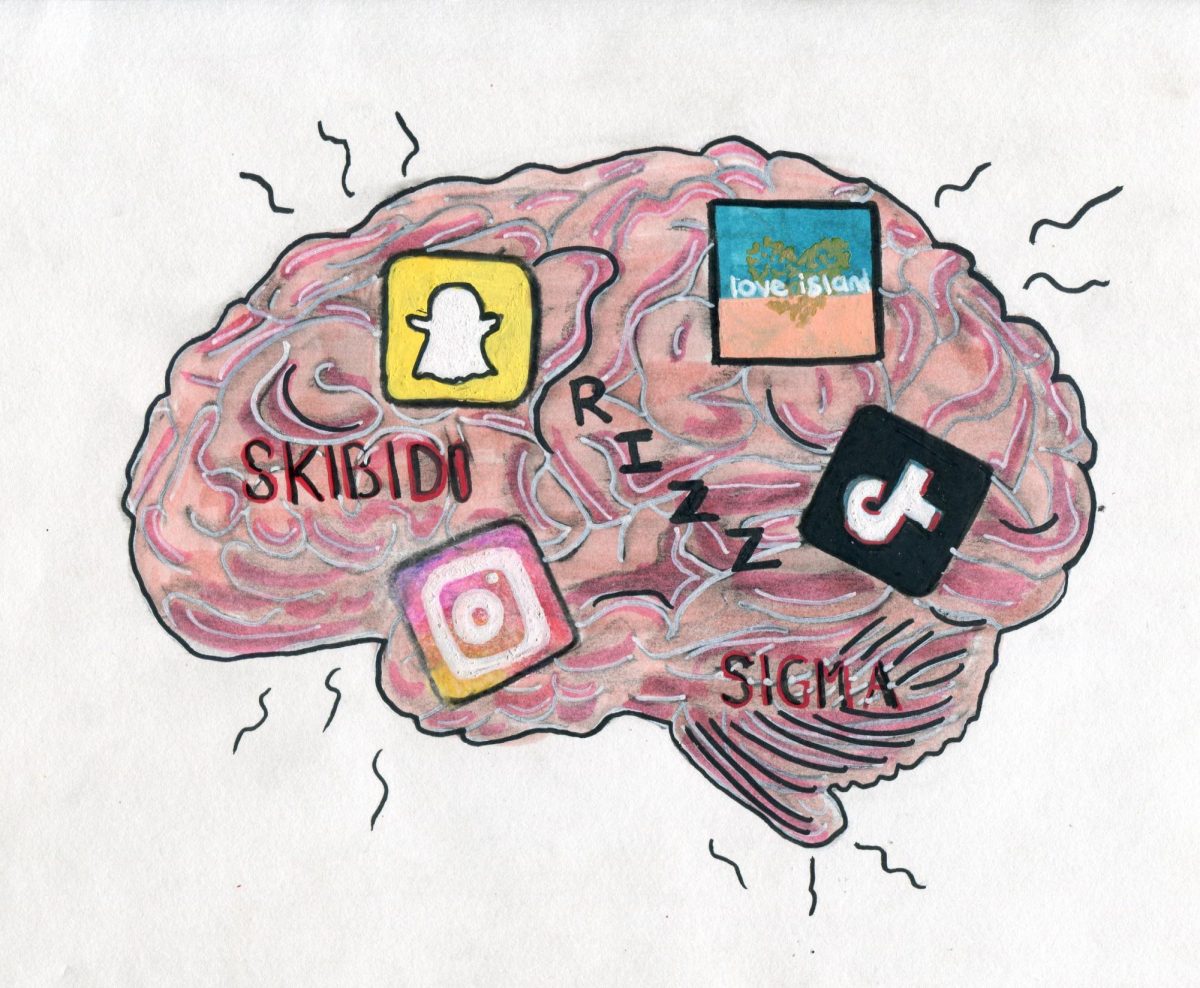
After watching all the blogs and op docs on our own time it was finally time to start our own documentary. Romina (my partner for this project) and I were given a paper that helped organize our thoughts on exactly what we wanted to do.  At first, we wanted to have a documentary about the Broward Sheriffs Office and how the students who attended them felt about it and their future. Then one of our classmates, Nathaniel, brought a funny idea to us. What if we did an documentary about brainrot, otherwise known as Gen Z slang. I thought it'd be a funny idea, especially because how trendy and how relevant it was to common conversation at out school. It was a great idea and we put it on as a side thing for us to maybe do.

We accidentally confused Mrs.Stoklosa on what exactly our main plan for this project was so we had to redo the sheet twice. Once was because of our ideas being jumbled up and the other time because our lack of definitive shots. You could say we were off to a pleasant start. After realizing that the project was due the week after this one, I started to panic a little but our plan was quite solid. We took inspiration from the "American Promise" documentary we saw as it had a lot of just open speaking and decided to make the documentary in a more amateurish style. Something akin to a school newspaper while still having some explanation on topics. Romina and I began to plan what necessary components we needed for the project. What we came down to was three things:

The B roll
People to interview
And interview questions.


These three factors would be the biggest problems to get over. Romina and I would spend the first night of the project discussing online and searching on things to ask about and also to narrow down what exactly about Gen Z slang we wanted to ask about. We eventually came to the conclusion that it would be relating to how Gen Z slang impacts the conversations we have with our peers. This seemed vague enough to get a lot of good answers but also closed enough where we could elicit specific answers for our topic. The questions we came up were different. Romina took more of a general questions while I choose more focused questions. The questions are as follows:

Romina's Questions
How do you feel towards gen z slang?
How would you define gen z slang?
What are some of your favorite slang words to use and why?
How often do you use them and in what context?
How does gen z slang allow for you to bond with others?


Mine
How has communication been easier or harder because of the slang?
Do you use these words over social media, and if so how?
Do you feel that gen z slang has become over saturated within school?
How does gen z slang allow for you to bond with your friends and classmates at school?
How often do you use them at school compared to out of school use?

This Gave us a good range of answers we could elicit from the interviewees. We understood that it was important to pick people that would make for good responses when being interviewed so we picked a bunch of students and a teacher. I had a few teachers I could ask but nothing really came to me at the moment so I would decide later. We would then start to film.


Tuesday, December 10, 2024

Day 1: Introduction to documentaries

Documentaries was the main focus of this new quarter of our class. We were first introduced to the concept of them as Mrs.Stoklosa talked about them. Previously, I had never really paid attention to documentaries much. I may have had a faint memory of watching an animal one but I couldn't remember much of it. She went over about all the different types of genres within documentaries like mockumentaries and historical documentaries. Things like whether they were participation or observational were also included. The point of documentaries are films that capture the realities of things and display them with a certain intent. Historical documentaries are made in order to give summaries and retellings of past events in order to be digestible for audiences while things like mockumentaries will depict fictional events, but presented as a documentary. These nuances make it so every documentary is special in their own way. 

As a way of introducing us to them we were first made to watch a documentary called "American Promise" that was the story of two boys who grew up attending Dalton High School in new york. We get to see their struggles, their everyday activities and get to really know these people by the end of it. The story was extremely captivating as I found it very relatable to myself and to the family around me. My cousin attended a school much like Dalton. Seeing my cousin in the boys I was really able to take in everything and sympathize heavily. It was by far one of the best introductions to a documentary I could have asked for. When Mrs. Stoklosa asked us whether the next year should watch it because it seemed largely outdated, I was happy when the class roared for her to have them watch it. Especially the discussion afterword's on whether we really got to see their real face through the documentary. It helped me understand the idea of documentaries much better.  

Next we watched a film called "Exit Through The Gift Shop". This film I liked significantly less not only because it wasn't my style but I didn't particularly like the "main character of it. However, the technical aspects of the documentary were extremely well done, especially the editing. I found it extremely interesting how the person who was telling the story, Banksy, a well known street artist is the one who tells the story. It portrays Thierry in a very negative light which would be odd for someone who is supposed to be the main focus. It was like he didn't like how Thierry claimed his fame so he portrayed how he thought he should be viewed. Like he was telling the audience "this guy isn't as cool as he is cracked up to be". This helped me understand that every person has a specific intent with what they want to portray in their documentary and it is up to the viewers to interpret it their own way. 

We watched a few more op documentaries that were cute and like one about a farm where people helped disabled animals called "Pickles" or a lawyer speaking up about war crimes in "The Case Against Torture". With that, our time of learning had been up and it was basically time to start our very own documentary project. I was certainly looking forward to it!


Monday, December 2, 2024

The Great Transition

It seemed like yesterday I was working with my partner in  order to get the film to be finished and nice looking. After a whole year of working on different works such as finishing up my previous projects of a presentation on self and the media and a documentary, I feel like it's about time I came back stronger for A level in order to be the best I can be. However, I know it's not going to be easy. If it was, it wouldn't help any of us and we would be stuck perpetually. Instead, we are constantly growing in our abilities to articulate and convey our experiences through this very blog. I look forward to the trials and tribulations that come from the blog and strive to do better than even last year (With it's not so enjoyable end)

Tuesday, April 2, 2024

Film Opening

 This is the official film opening! It's finally done after all that work! Hope you like it!

Monarch Film


Creative Critical Reflection

Good afternoon,

This seems to be the final afternoon as I'll be posting the ccr. With that being said let me post the my answers to the responses alongside my posts. 

How does your product use or challenge conventions and how does it represent social groups or issues?

Our product challenges the genre convention. Our genre being military fiction, our product does not abide by the general genre convention. The general military fiction such as planet of the apes, saving private Ryan, etc follow more of the battle and the war itself while our movie is more of a subversion of that and moreso looks at someone's internal conflict on the impact of war on them personally. There is also a representation of woman which are mainly side characters or prizes to be won by the protagonist in these types of films. The more person vs society nature from the film really sets it apart from the rest

How does your product engage with audiences and how would it be distributed as a real media text?
Romina and I originally decided on our target audience as middle-aged men. We decided the military would be the most targetted for our audience as the story was more on an introspection on it. We wanted to make it as authentic as possible so we even used jrotc uniforms and pages in order to get that militaristic vibe. The whole opening scene was even shot to seem like it was morning and as someone who has participated in military bootcamp, they LOVE how early things begin. The speech at the beginning is used to set the tone and goal of the whole story while also giving those big speeches people love to hear in these types of movies. However, as we filmed we changed the protagonist to a woman which could also attract female military personel to want to maybe watch the movie and relate to the main character.

How did your production skills develop throughout this project?
The main issues I encountered during the project were time related. I was able to do everything effectively but having it on time was always hard for me for some reason. It wasn't out of laziness either. Regardless, that time management led to large amounts of procrastination. This procrastination led me to doing poorer jobs on assignments time and efficiently and than being even less motivated. What I learnt is that from doing things more steadily and pacing yourself, you won't kill yourself last minute.

How did you integrate technologies – software, hardware and online – in this project?
I used several different things such as social media, blogger, the different places for music such as freesound and other different software. For editing I used premire pro and while sometimes buggy, it still worked. For filming we utilized a tripod and phone stand to keep camera steady and other things.

CCR 1
CCR 2

Thursday, March 28, 2024

Filming finished!

 Good afternoon blog,

The final day of filming! I was excited that we finally got a date for filming and actually planned properly after the mistake on Tuesday. Learning from mistakes is the hardest part of doing all of this so we have to make the most of what we have left. Regardless, we scheduled a time around 5 which would be a good enough time yk get things started as it wasn’t too dark yet and still light enough to film everything! I packed up my stuff, got in the car and drove myself over.


Romina lived in the lakes which was a community that wasn’t too far from me. Originally we were going to film some of the scenes at her house and some of them at mine but because of the way the community was set up, it was just too perfect to be the set for things. When I got there, we immediately started going over our story board and hashing over what exactly we wanted to do with the films we set up. During that time, I was going to start changing but a we got a lively surprise. 


Romina’s sister was in the house and I knew her previously because we were both in jrotc. That meant that she also had a uniform and everything I had. I noticed this and talked it over with romina. It would be way better if she was to star as the main character instead of me. Not only because the rooms we were filming in weren’t the type to be in a men’s room but also for better time setting and for me to do the camera work. For most of the film I did the camera work and I felt like I did a good job. I’m confident in the camera so I tried to convince her to join. After a few minutes of talking and insisting that she’ll look great within the film, she reluctantly agreed. 


So after that we started the filming. We described the general vibe of the main character she would be playing. The main issue with Romina’s sister is that she was rarely serious. She would smile pretty often and that kind of contradicted the type of character she was trying to play. We had to council her into how exactly she should be looking for a bit and how she should present herself. She did a great job adapting quickly and did her best to fit in. It wasn’t something out of nowhere as she was aware of the project beforehand but it was still none the less impressive. 


The scenes we started off with were scenes that all took place within her room. This space was pretty small and barren but fit perfectly with the vibe. To add onto it, off camera was a walk in closet with a light. This light would be perfect for the specific lighting we needed in the room at the start in order for it to not look really bad and dark at the start. Utilizing the closet door to change the amount of light that was visible was kind of a novel and creative idea in my book and I think it worked. After that, since it was getting a little darker, we were able to replicate how things in the morning would be: daybreak. The timing was pretty genius as even though it was the afternoon we could show it as of it was the morning. I don’t think it I came in the middle of the day I could properly replicate this image of the scenes and made the tone of the morning feel especially moody. 


We then filmed the scenes in the house and outside which flowed seamlessly together as she put on her uniform. The uniform was well kept as I told her before in jrotc class to keep it clean for upcoming events. This seemed to be a double perk as it was ready to be worn for the costume design. The uniform was out on and she really killed it with the more subtle scenes where she has to put on the facade of being a good caring person with no worries. 


Overall filming went really well and I think that the editing process will be smooth, even if I feel we took a little too much footage. Anyways that’s about all the time we have! Until next time! 

Final Critical Reflection

The documentary "The Shape Of Stories", developed by Alec Labossiere, is a documentary that explores the different mediums that ca...